No Mans Sky Trename Planet After Upload
 | The subject of this commodity is from the Prisms update. The information from this article is upwards-to-date every bit of 31 August, 2021. |
The subject of this article is from the Prisms update.
The information from this commodity is upwards-to-appointment as of 31 August, 2021.
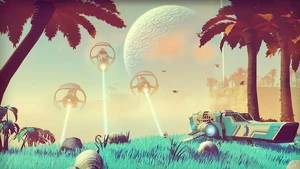
Planetary surface (pre-release)
A planet is an astronomical body that moves around a star.
Contents
- one Summary
- 1.i Moons
- 2 General data
- 3 Planetary Astrodynamics
- 4 Characteristics
- 4.1 Rarity - High
- iv.ii Rarity - Middle
- iv.3 Rarity - Low
- four.iv Rarity - None
- four.5 Rarity - Weird
- 4.6 Rarity - Infested
- 5 Additional Information
- half-dozen Discovered planets
- vii Proper name generation
- vii.1 Way
- 7.2 Beautification
- 8 Additional information
- 9 Speculation
- 10 Bugs
- 11 Release history
- 12 Gallery
Summary [ ]
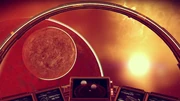
A planet and its moon (Foundation)
A planet is an astronomical trunk moving in an elliptical orbit around a star. Players will commencement on a random planet in a star system well-nigh the edge of the Euclid milky way. When players land on another planet, the planet'due south basic information (atmospheric condition atmospheric condition, flora & fauna frequency and Sentinel activity) will be revealed to the player.
Players may scan a planet before landing, receiving approximate data regarding its biome through an adjective, e.1000. Acidic/Tropical, and a specific listing of some valuable resources available on the planet. Terrain and planet blazon are visible from space, likewise equally a mostly accurate project of what will be encountered post landing.
Based on the associated biome, some planets volition contain special features that other planets will not possess. For example, the Exotic biome on a planet in the Zuunurt arrangement. (MOGO:0EFD:007C:07AF:019F) displays large hexagons on its surface non found on almost other planets.
Moons [ ]
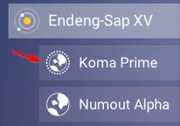
Dots around a planet indicate moons
Planets may have one or two moons, although about take none. Players can country on moons in the same way as a planet as they are treated in the same manner.
Note that the total number of planets and moons in a specific arrangement will not exceed six. This limits the maximum moons in a system to four.
General information [ ]
There are more than xviii quintillion possible seeds for procedurally-generated planets (xviii,446,744,073,709,551,616 or 2^64 to be verbal) of many sizes, colors, and biomes. Each planet orbits between i and three stars (with 1 star being by far the most common), creating a cycle of twenty-four hours and night.
Some planets are harmless, without worry or danger, but some tin can exist very unsafe to the extent that the planet cannot exist explored because of the danger. Initial names of the planets are procedurally generated and can exist hard to pronounce, which is not unusual in a sci-fi game. The starting time histrion to discover the planet gets 1 chance to choose to rename it earlier uploading the information. Planet naming will become through a standard profanity filter.
Planets of inhabited or formerly inhabited systems will take Points of Interest (i.east. Waypoints or artificial structures) for the player to discover. Uncharted systems likewise every bit Dead planets will only have one artificial bespeak of interest, the portal. On either system type or planet special resources and locations can yet be establish.
When logging a discovery of a planet on this wiki - please use Template:Planet preload.
Planetary Astrodynamics [ ]
All planets and moons in the same star system in No Human being'southward Heaven are always tidally locked to each other in the same way as in the real world the Moon is tidally locked to Earth. This means that when a player is continuing on a planet - they will always see the same surface of each other planet and moon in the same organization.
The duration of daytime in No Human's Sky universe for both planets and moons is called a Sol and takes on average 15 minutes real-fourth dimension ("real-time" meaning that the twenty-four hours/dark cycle continues running even when the game is paused). This implies that a full day (i.due east. daylight time plus dark) lasts 2 Sols, i.e. thirty minutes existent-time. This is acquired by all planets in game having the same orbital period that besides lasts 2 Sols. Moreover, all planets are stationary around their rotation centrality (in other words - they do not have a rotation centrality), implying the following astrodynamic properties mutual to all the planets in game:
| Property | Value |
|---|---|
| Orbital period | ii Sols |
| Rotation catamenia | Inifinite |
Year:
| two Sols |
Twenty-four hours:
| 2 Sols |
Note however that when observing the night sky from a planet, distant stars announced to motility as if the planet rotates around its axis, which appears to be contradictory to all the planets in game not having a rotation axis.
Moons are likewise stationary effectually their rotation axis, and moreover moons are also stationary in their orbit around their primary, which means that when standing on a moon's master - a thespian will always run across its moon as a stationary object in the sky - and vice-versa (i.e. when continuing on a moon - its primary will appear to be stationary in the sky, equally in fact volition all the other planets and moons in this arrangement).
When standing on a planet or moon, Analysis Visor is able to detect geomagnetic planetary coordinates that are shown in the top right corner of the HUD (heads-upwards brandish) as a latitude/longitude pair. The planet's geomagnetic N Pole is where latitude = +90.00, while geomagnetic South Pole is where latitude = -90.00.
Every bit all the planets and moons accept an infinite rotation menstruation, they would not take geographic poles in the usual sense of the word, yet each planet/moon nevertheless has exactly 2 antipodal points on its surface that both show the to the lowest degree variability of distance to the arrangement's star compared to any other betoken on this planet'southward surface. This results in eternal twilight when standing on or close to these 2 points and Solar Panels producing the standard twilight amount of ability of 25 kPs nearly round the clock, and hence these 2 points could be considered to play a similar function to geographic poles of a real-world celestial trunk that has a rotation axis.
As in existent world, these geographic poles exercise non necessarily coincide with the geomagnetic poles, and in fact could be quite far away from the +/-90.00 latitude coordinate displayed on the Assay Visor's HUD. As such, locating geographic poles for a planet/moon requires some attempt. One way to locate them is to utilize your starship to wing into space so that the planet of involvement is directly between your starship and its star, and then waiting until the star starts to emerge from behind the planet, and moves some distance away from it. Now, the line between the planet and the star will show the project of the planet'south geographic equator - so the geographic poles would exist the 2 points on that planet'due south surface that are equidistant from the equator. Another approach is to stand on the planet's surface and observe the sunset, then employ your starship to catch upward with the sun. Subsequently iii-4 catchups your path volition eventually converge with the planet's geographic equator, then by taking the geomagnetic coordinates shown on your Analysis Visor'south HUD of whatsoever ii points on the equator - it is then possible to calculate the geomagnetic coordinates of the 2 geographic poles.
Characteristics [ ]
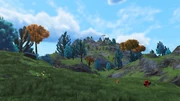
Planet surface (Next)
The following information is displayed when landing on a planet, and in the discovery screen. They influence what yous tin can find on a planet, and what its weather condition will be.
- Biome influences the flora, creature, resources, and the general environmental hazard.
- Weather influences the intensity of the ecology hazard and the presence of Exotic elements.
- Sentinel behaviour influences how strict they are near the histrion breaking their rules. If red it means they will even assault on sight, which indicates the presence of natural trade bolt.
- Flora influences the amount, and density of flora present on the planet. This rarity can be high, centre, low or none.
- Fauna influences the amount, and density of creature nowadays on the planet. This rarity tin be high, middle, low or none.
The rarity is one of the post-obit terms for both the flora and the brute. The sequence is taken from the game file.
Rarity - High [ ]
- Arable
- High
- Ample
- Frequent
- Full
- Generous
- Bountiful
- Copious
- Rich
- Abundant
Rarity - Middle [ ]
- Average
- Regular
- Common
- Typical
- Ordinary
- Occasional
- Numerous
- Moderate
- Fair
- Medium
Rarity - Low [ ]
- Low
- Scarce
- Exceptional
- Rare
- Limited
- Sporadic
- Intermittent
- Uncommon
- Few
- Sparse
Rarity - None [ ]
- None
- Deficient
- Undetected
- Lacking
- Absent
- Nonexistent
- Empty
- Not Present
- Devoid
- Barren
Rarity - Weird [ ]
- Unusual
- Lost
- Displaced
- From Elsewhere
- Uprooted
- Misplaced
- Forfeited
- Between Worlds
Rarity - Infested [ ]
- Infected
- Diseased
- Twisted
- Screaming
- Viral
- Invasive
Additional Data [ ]
The type of star a planet orbits is important for some biomes to appear. The main example are exotic planets in atypical stars.
Some planets have rings surrounding them, which are made up of asteroids and crystals. However mining in a ring is hard because every bit shortly equally one enters a ring it becomes very hard to encounter due to the fine particles. Sometimes a planet with a ring may also have a moon, this may cause the ring to clip within said moon.
All planets bearing water appear "oceanic" from space, meaning several parts of their surface prove bounding main terrain types and a large per centum of their surface will have pockets of h2o inside. If i digs down in a valley or plain a layer of secret h2o can be found. All moons however are pangean in nature. The prevalence of water does not prefer whatsoever biome type, only excludes dead and seemingly exotic worlds.
All planets have an Outer Temper which tin be reached by base of operations building or various glitches. The Outer Atmosphere leads direct to the Infinite around the planet. For more data, refer to the Biome Subtype - Space page.
Discovered planets [ ]
For a list of discovered planets, see the Planets category page. For a list of pre-release planets, see the Pre-release planets category folio.
(When creating a new page for a planet, please employ the Planet option from the pre-congenital templates.)
Name generation [ ]
The names are procedurally generated using ane of the following styles and in sure cases the Adornment term is used.
The sequence is taken from the game file.
Style [ ]
- ProcNorm
- ProcNorm + Adornment
- ProcNorm + Numeral
- ProcNorm + ShortCode
- ProcLong + ProcShort
- ProcShort + LongCode
- "New" + ProcNorm
The list is based on the planets documented by their original names on the wiki:
- ProcShort: It uses 3-five letters.
- ProcNorm: It uses 4-9 letters.
- ProcLong : Information technology uses 6-ten letters.
- Numeral: Information technology uses roman numerals, for example Five or XVII.
- ShortCode: It uses 3 characters and the format is LNN where L is an upper example alphabetic character and Northward is a numeral, for instance S10.
- LongCode: It uses five characters and the format is NN/LN where L is an upper example letter and Northward is a numeral, for example 72/T3.
Adornment [ ]
- Prime
- Major
- Minor
- Alpha
- Beta
- Gamma
- Delta
- Omega
- Sigma
- Tau
Boosted information [ ]
- The rarity terms for flora and fauna are extracted from the NMS_LOC1_ENGLISH.MBIN (i.77) game file, while the proper noun generation is extracted from the NMS_UPDATE3_ENGLISH.MBIN (i.77) game file.
- There is a 42 character limit when renaming a planet or a moon.
Speculation [ ]
Information technology is physically impossible for h2o to exist liquid below -73,15 °C; depending on the pressure it is either solid or gas. Some planets have oceans at this temperature. And then, we tin can assume that non all planets' liquids are made up of water. It is easiest to do this if y'all forget that the adjust vocalization always refers to liquids as h2o.
Bugs [ ]
When observing the night sky on a planet, distant stars appear to move as if the planet rotates around its centrality, while all the planets in game in fact practice not accept a rotation centrality.
Release history [ ]
- Release - An integral part of the initial game release.
- NEXT - terrain and planet type become visible from space.
- Origins - All planets have richer flora, creature, minerals, and terrain.
Gallery [ ]
NEXT
-

Desert Biome Surface.
-

Cold Biome Surface.
-

Moving-picture show of a moon, for size comparison to planets.
-
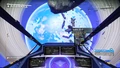
A minor ringed planet.
-
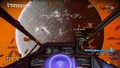
A medium-sized planet.
-
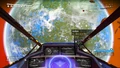
A large planet. Just big planets can take moons.
Atlas Rises
-
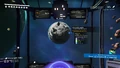
Movie of a moon, for size comparing to planets.
-
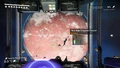
A small-scale planet.
-
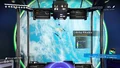
A medium-sized planet.
-
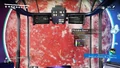
A large planet. Merely large planets can take moons.
-
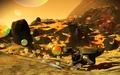
Dead planet - part of update one.xxx - Bubbles all over the surface.
Pathfinder
-
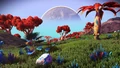
Planet surface.
-

Desert Biome Surface.
-

Cold Biome Surface.
Source: https://nomanssky.fandom.com/wiki/Planet
0 Response to "No Mans Sky Trename Planet After Upload"
Post a Comment